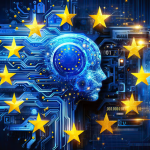

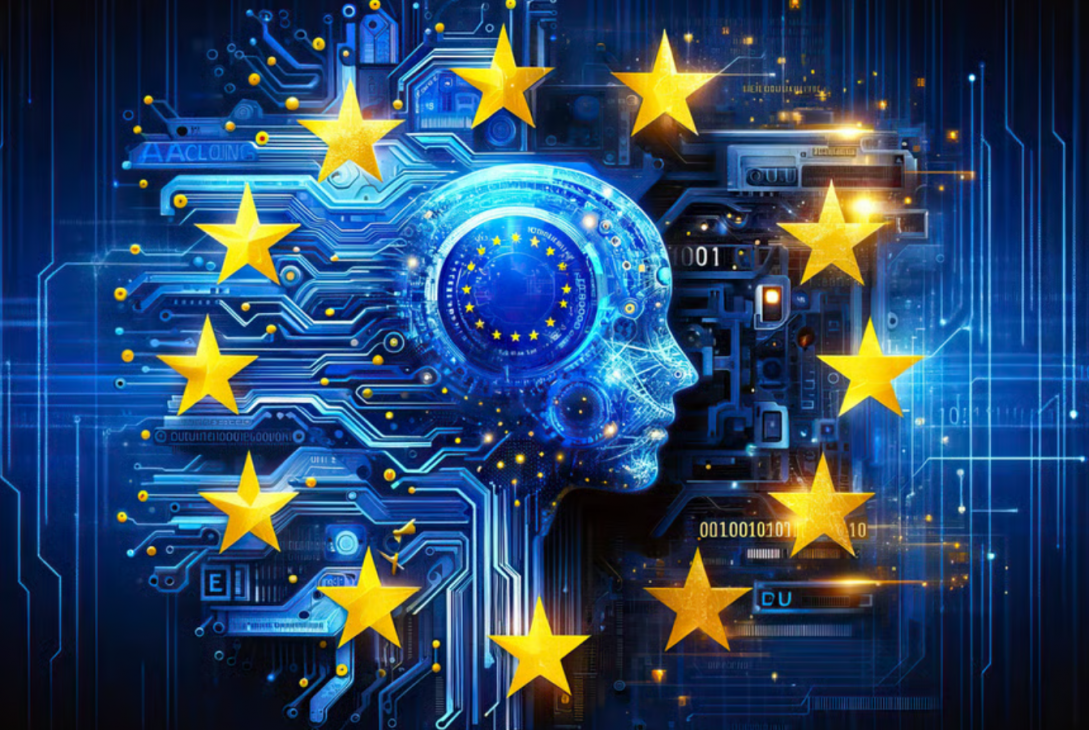
Europe is entering a new phase in the global artificial intelligence race. While the United States continues to dominate large-scale AI infrastructure and China accelerates industrial AI deployment, Europe is positioning itself differently: focusing on regulation, industrial applications, sustainability, and trusted AI systems.
Rather than competing purely on scale, Europe is building an ecosystem centered around practical enterprise AI, privacy-focused technologies, and advanced research partnerships.
Europe’s AI Strategy Is Different
Europe’s approach to AI is less about consumer hype and more about infrastructure, industry, and governance.
Several trends are shaping the region’s AI future:
- Heavy investment in industrial AI
- Expansion of AI-ready data centers
- Stronger AI regulation frameworks
- Increased demand for sovereign AI infrastructure
- Growth in energy-efficient AI systems
This creates opportunities for businesses working in automation, cloud computing, semiconductors, cybersecurity, robotics, and enterprise software.
Industrial AI Could Become Europe’s Biggest Strength
Unlike regions focused mainly on consumer AI apps, Europe has deep expertise in manufacturing, automotive engineering, logistics, healthcare, and industrial automation.
AI adoption is accelerating across sectors such as:
- Smart factories
- Predictive maintenance
- Supply chain optimization
- Energy grid management
- Autonomous logistics systems
Countries like Germany, France, and Sweden are expected to lead in industrial AI deployment due to their strong engineering ecosystems.
AI Infrastructure Spending Is Rising Fast
One of the biggest shifts expected in Europe is the expansion of AI infrastructure.
Governments and private companies are investing heavily in:
- High-performance computing clusters
- AI cloud platforms
- Semiconductor partnerships
- Energy-efficient GPU facilities
- Localized AI processing systems
Europe increasingly wants to reduce dependence on foreign AI infrastructure and build more domestic computing capacity.
This trend could benefit companies involved in:
- Cloud computing
- Semiconductor manufacturing
- Renewable energy
- Cooling technologies
- Enterprise cybersecurity
Regulation May Become a Competitive Advantage
Europe is already known for strict digital regulations, and AI is no exception.
The region’s regulatory framework aims to create:
- Transparent AI systems
- Better consumer protections
- Safer enterprise deployment standards
- Clearer rules for data usage
While some critics argue regulation could slow innovation, others believe it may actually increase trust and accelerate enterprise adoption over time.
Businesses operating in healthcare, finance, and government services may especially prefer compliant and transparent AI solutions.
Europe Could Lead in “Green AI”
Energy consumption is becoming one of the biggest challenges in artificial intelligence.
Europe’s strong focus on sustainability may push the region toward:
- Low-energy AI models
- Efficient data center design
- Renewable-powered AI infrastructure
- Smaller specialized AI systems instead of massive models
This could create a unique market segment around environmentally optimized AI technologies.
Startups and Research Ecosystems Are Expanding
Europe continues to produce high-level AI talent through universities and research institutions.
The next wave of growth may come from:
- AI cybersecurity startups
- Financial AI tools
- Healthcare diagnostics platforms
- Robotics companies
- AI productivity software
Cities like Berlin, Paris, Amsterdam, and Stockholm are increasingly becoming important AI startup hubs.
Key Challenges Europe Still Faces
Despite strong momentum, Europe still faces several structural challenges:
- Limited access to large-scale AI chips
- Competition for AI talent
- Slower venture capital markets compared to the U.S.
- Dependence on external cloud providers
- Fragmentation between EU member states
The speed at which Europe can solve these issues may determine its long-term competitiveness in AI.
Outlook for the Next 5 Years
Europe’s AI future will likely look different from Silicon Valley’s consumer-focused ecosystem.
Instead, the region appears positioned to become a global leader in:
- Enterprise AI
- Industrial automation
- Trusted AI systems
- AI regulation frameworks
- Sustainable AI infrastructure
For investors, businesses, and technology professionals, Europe’s AI market could become one of the most important areas to watch as global competition in artificial intelligence continues accelerating.
Disclaimer: This article is for informational purposes only and does not constitute financial, investment, or business advice. Technology markets and AI industries can change rapidly, and readers should conduct independent research before making commercial or investment decisions.